
Master’s Scholars Engage Lwengo and Rakai Communities to Inform Research Conceptualisation
By Myres Ndyabawe
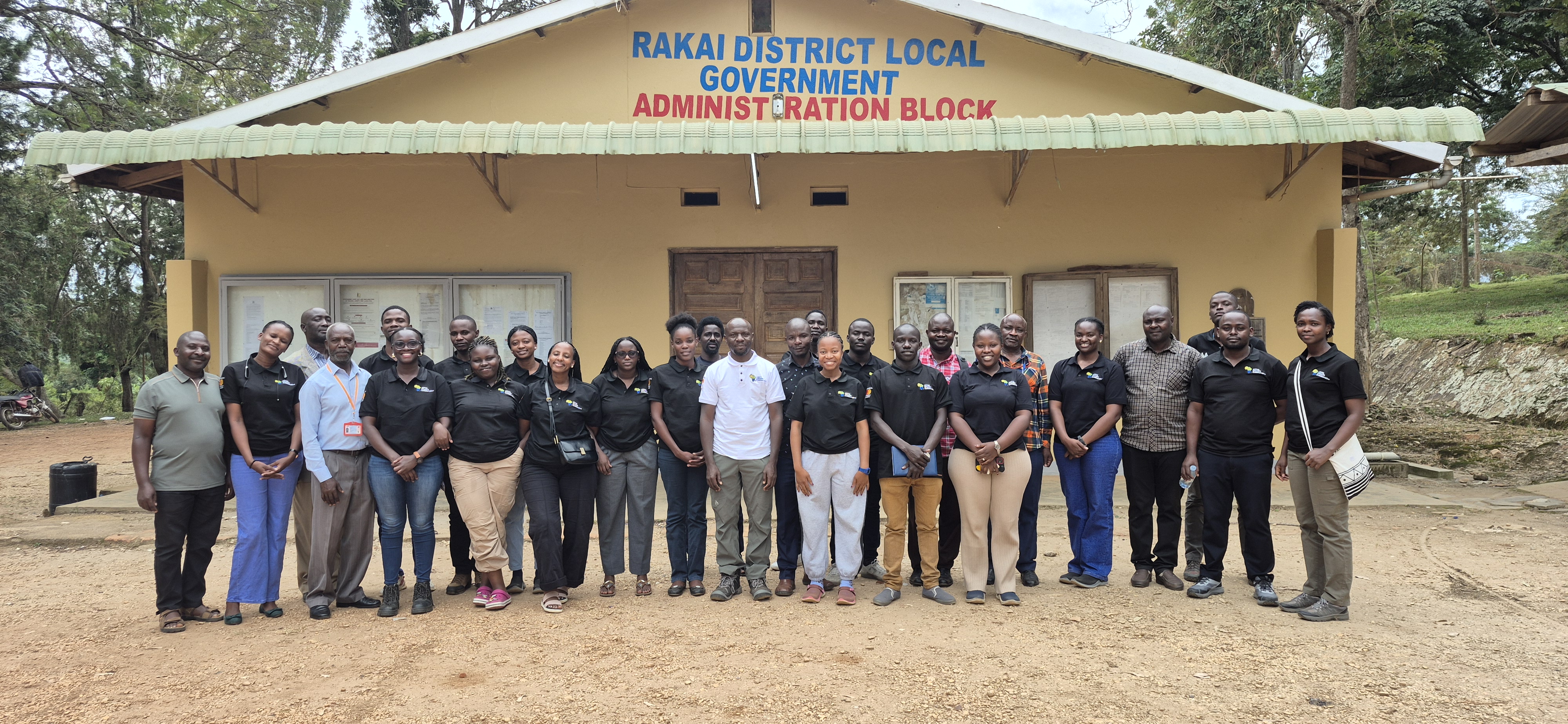
Master’s Scholars under the Africa Climate Collaborative (ACC) at Makerere University conducted a reconnaissance visit to Lwengo and Rakai districts to inform their academic research engagements. Supported by the Mastercard Foundation, the scholars interacted with district officials, farmer groups, and communities to understand climate-related challenges affecting local livelihoods. The engagements highlighted challenges including prolonged dry spells, invasive water weeds, saline water, poor waste management, pests, and diseases.
The visit was intended to ensure that the
research is informed by local realities, priorities, and perspectives, thereby
enabling the scholars to undertake work that is responsive to and aligned with
the needs of the communities it seeks to serve.
Accompanied by members of the ACC Program Delivery Team, Scholars engaged district technical staff, farmer cooperative representatives, and community members
before visiting selected farmers across the two districts.
These interactions provided an opportunity to gain first-hand insights into the climate change-related challenges affecting local livelihoods and communities, thereby helping to inform the design and implementation of their research activities.
 Cohort
1 of the Master’s Scholars pose for a group photo with Lwengo District
Officials and Farmer Groups Representatives during a reconnaissance visit in
Lwengo District.
Cohort
1 of the Master’s Scholars pose for a group photo with Lwengo District
Officials and Farmer Groups Representatives during a reconnaissance visit in
Lwengo District.
Lwengo District Agricultural Officer, Peter Bamwesigye welcomed the Africa Climate Collaborative staff and the Scholars in the district, pledging support for all initiatives that will be implemented in the district under the Africa Climate Collaborative.
“We want such good news and welcome such interventions that
transform our communities. As a district, we believe the research conducted by the students will
bring innovations that will improve the lives of the people we serve.” Bamwesigye said.
Community Challenges Requiring Research and Innovation
Richard Ayesiga, the manager of Kyazanga Farmers’
Cooperative Society, which brings together 1,088 farmers, noted that prolonged
dry spells and limited knowledge on climate resilience have reduced farmer
productivity in the area, urging students to provide solutions to farmers
through their research.
In Rakai District, the Senior Agricultural Officer, Ivan Bwow, led the team on a field visit to Lake Kijjanebalola. He explained that the proliferation of invasive water weeds has disrupted fishing activities and restricted access to the lake by other users, adversely affecting livelihoods, food security, and household incomes in surrounding communities.
 He further observed that some parts of Rakai District are
affected by saline water, which limits the viability of irrigation. This
challenge has contributed to increased encroachment on swamps and wetlands as
communities search for alternative sources of water and productive land,
placing additional pressure on fragile ecosystems.
He further observed that some parts of Rakai District are
affected by saline water, which limits the viability of irrigation. This
challenge has contributed to increased encroachment on swamps and wetlands as
communities search for alternative sources of water and productive land,
placing additional pressure on fragile ecosystems.
The other challenges that were noted across the two
districts include;
i.
Poor waste management
ii.
Plastic pollution
iii.
Crop pests and diseases
iv. Mis-use of artificial fertilizer that has affected soil health.

Research and Innovation to Inform Climate Solutions
Research is a core requirement for the attainment of a Master's degree at Makerere University. The Scholars, who receive comprehensive scholarships under the ACC to pursue Master's degrees in various disciplines, are expected to undertake research in Lwengo and Rakai districts during their second year of study.
During the engagement, participants raised concerns about
the common practice of researchers collecting data from communities without
returning to share the findings and recommendations.
Responding to these concerns on behalf of ACC, Mr. Antonny
Tugaineyo, Principal Coordinator of the Climate Resilience Support Centre
(CRSC), reassured stakeholders that the Program is committed to ensuring that
research findings are disseminated to local communities and relevant
stakeholders.
He noted that the
evidence generated will be used to inform policy development, strengthen
decision-making, and support innovative solutions to climate-related challenges
affecting Lwengo and Rakai districts.
“The fourth pillar of the Africa Climate Collaborative is
Networks, Policy and Learning. Our work does not end with conducting research.
We are committed to engaging stakeholders at all levels to ensure that the
knowledge generated benefits the communities that contribute to and participate
in the research process,” Mr. Tugaineyo said.
Related Content

Subscribe To Our Newsletter Today
Our Partners